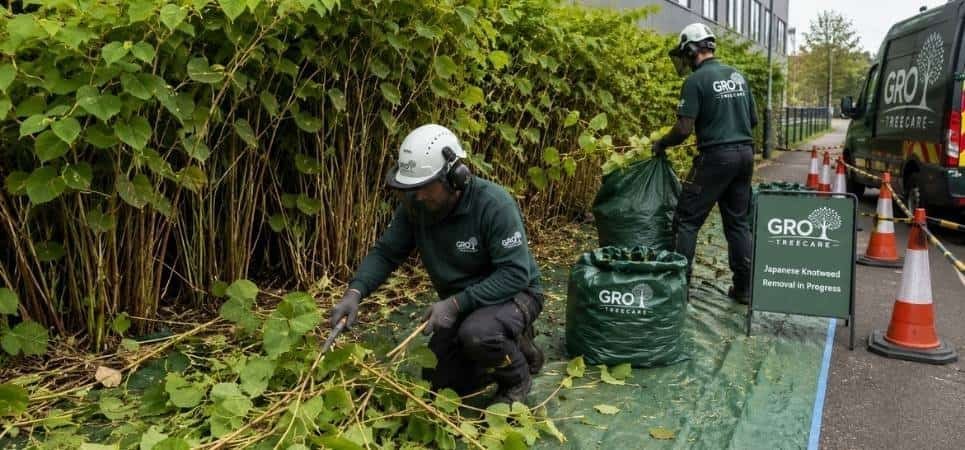
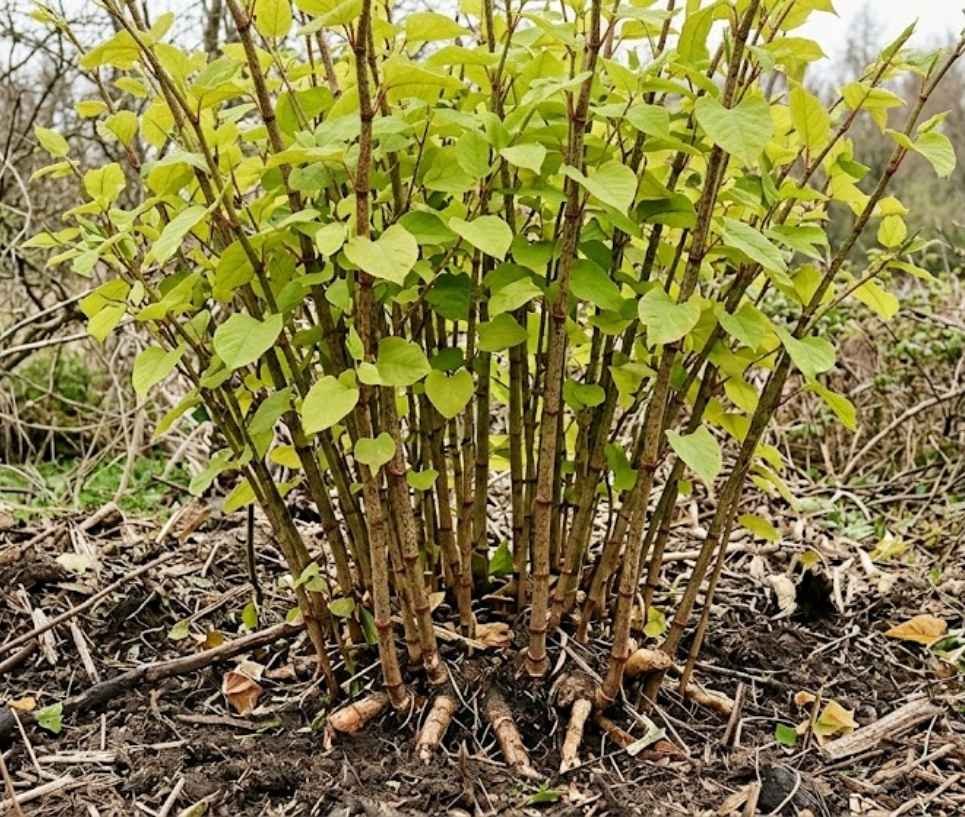
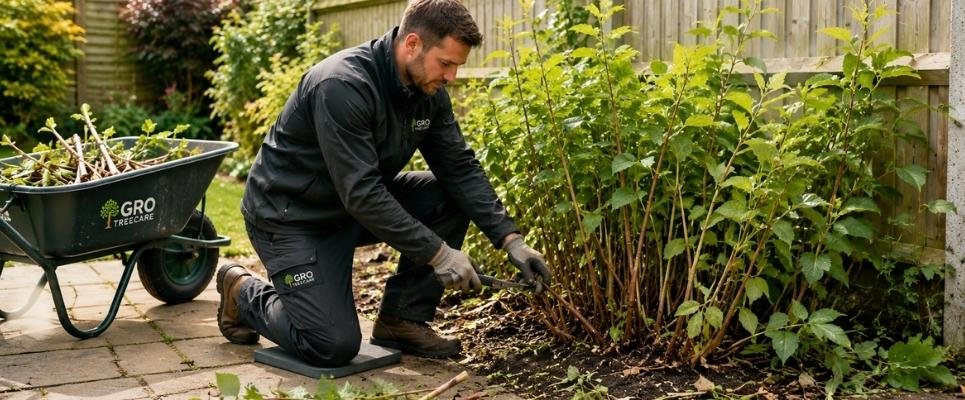
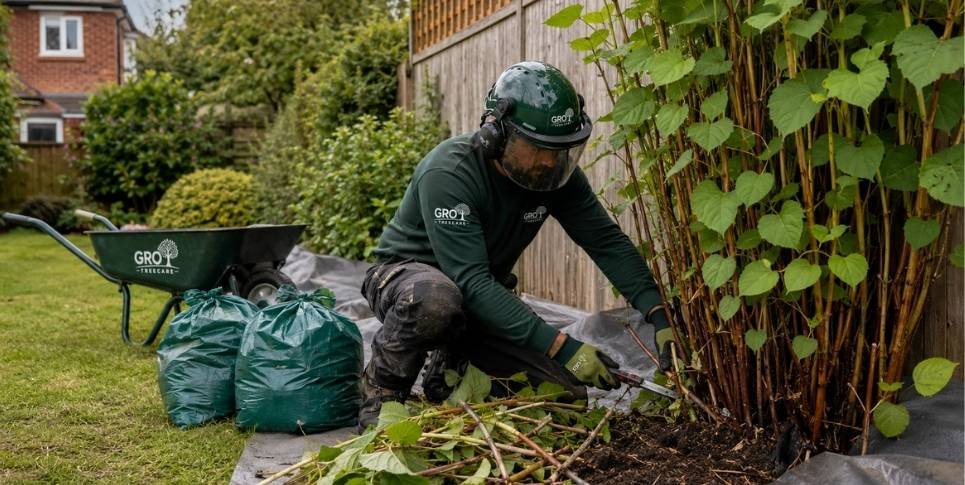
There is no single approach that suits every situation. Our Japanese knotweed specialists assess each Japanese knotweed infestation individually and recommend the right treatment removal approach for the scale, location, and budget. We offer different methods depending on whether the goal is control, long-term treatment, or complete physical removal.
Herbicide Treatment: The Most Common Solution for Controlling Japanese Knotweed
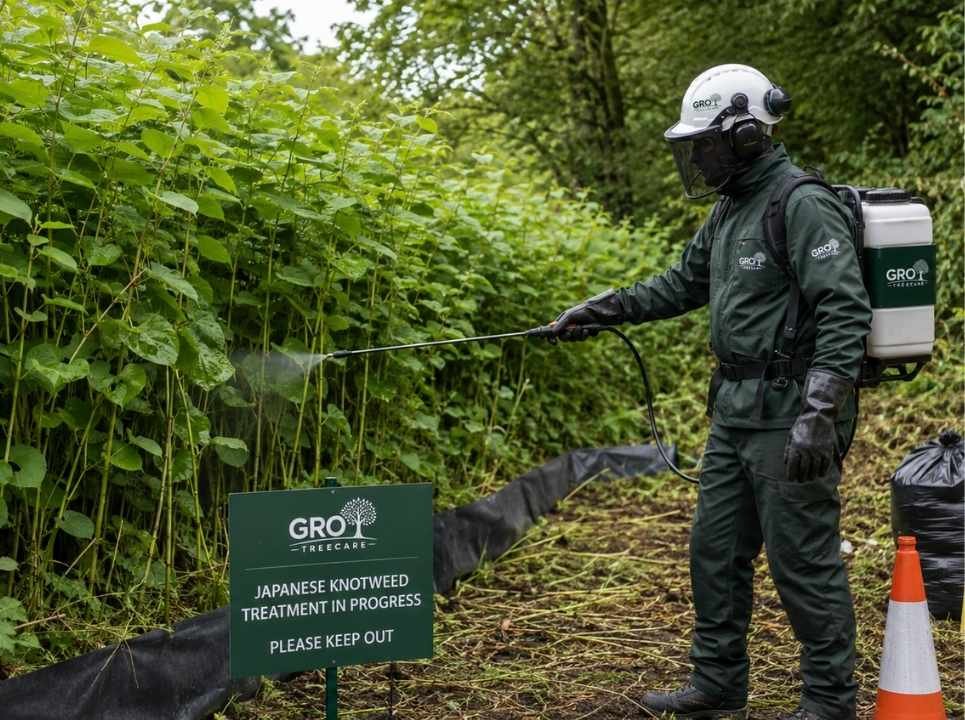
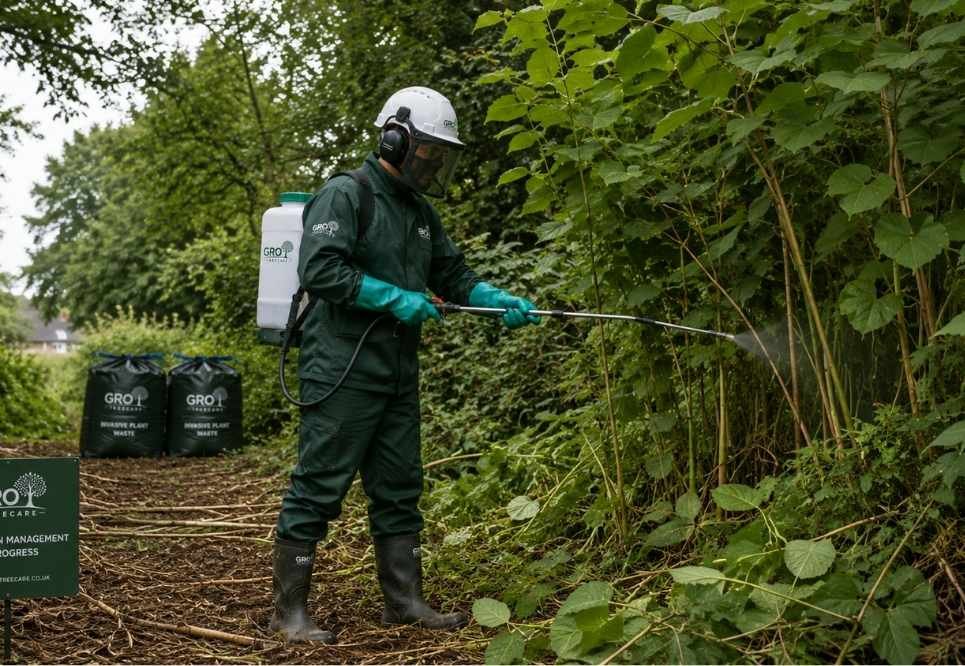
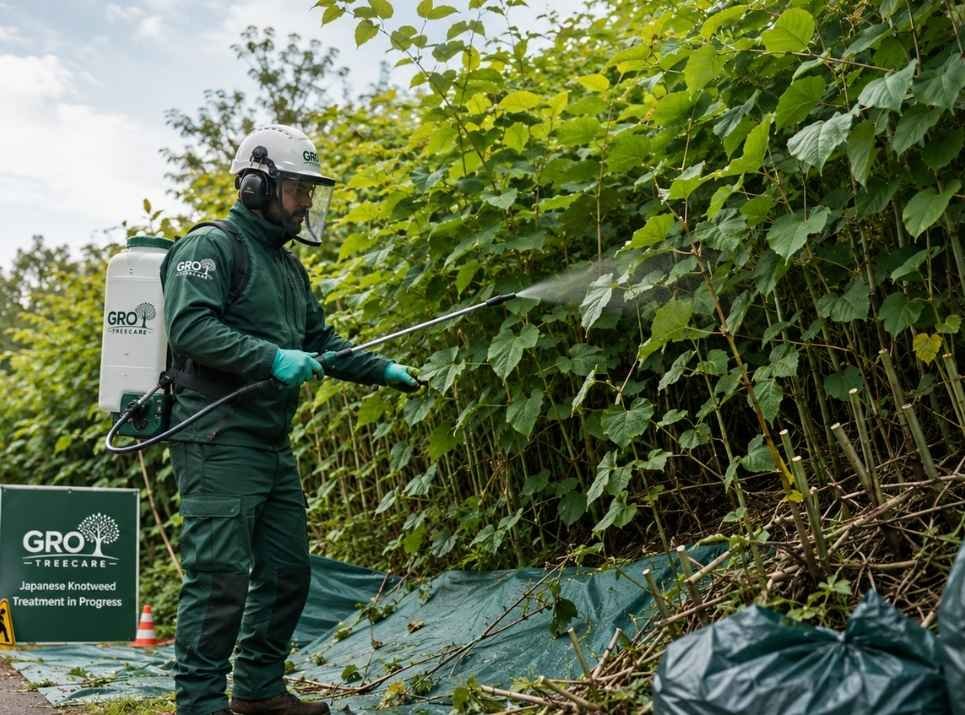
Herbicide treatment is the most widely used solution for managing Japanese knotweed and is typically the most cost-effective starting point. We apply professional-grade systemic herbicide directly to the knotweed plant, which works down through the soil and root system over time.
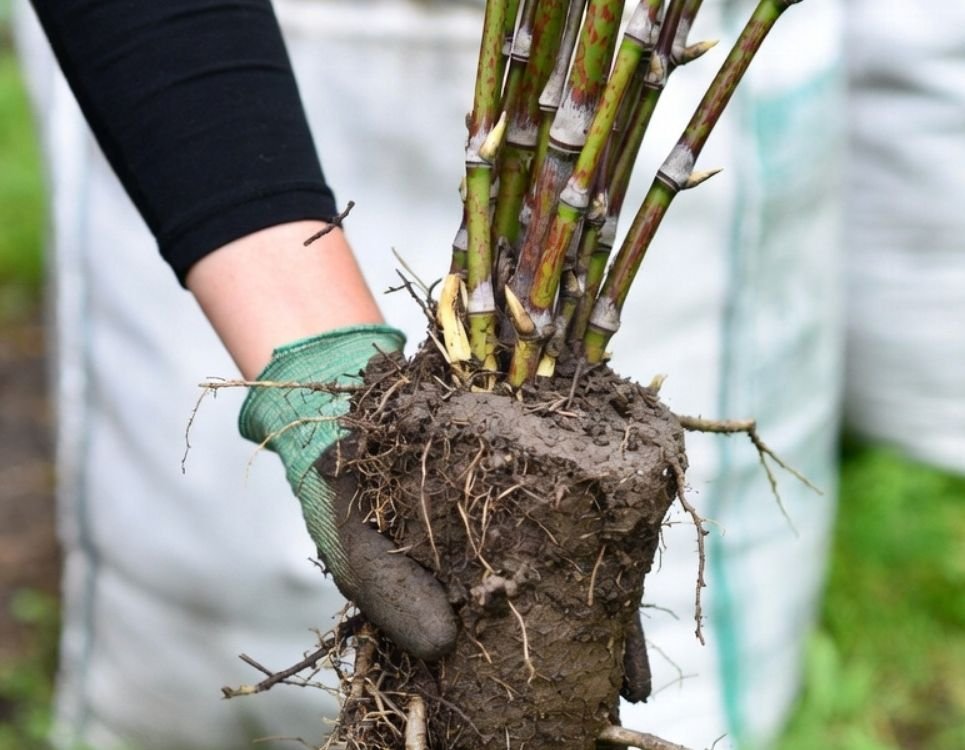
This solution requires multiple applications over three to five years to effectively reduce the knotweed back to a manageable level, and most professional treatment programmes in Freckleton reflect this timescale. Controlling Japanese knotweed this way is a process, not a one-off fix. The rhizomes remain in the soil but become progressively less active with each herbicide treatment cycle.
Herbicide is particularly effective where the Japanese knotweed treatment needs to cover large areas, or where excavation is not possible due to proximity to hard surfaces or structures. This is one of the treatment methods we discuss during every survey.
Excavation and Removal: The Fastest Solution to Remove Japanese Knotweed From a Site
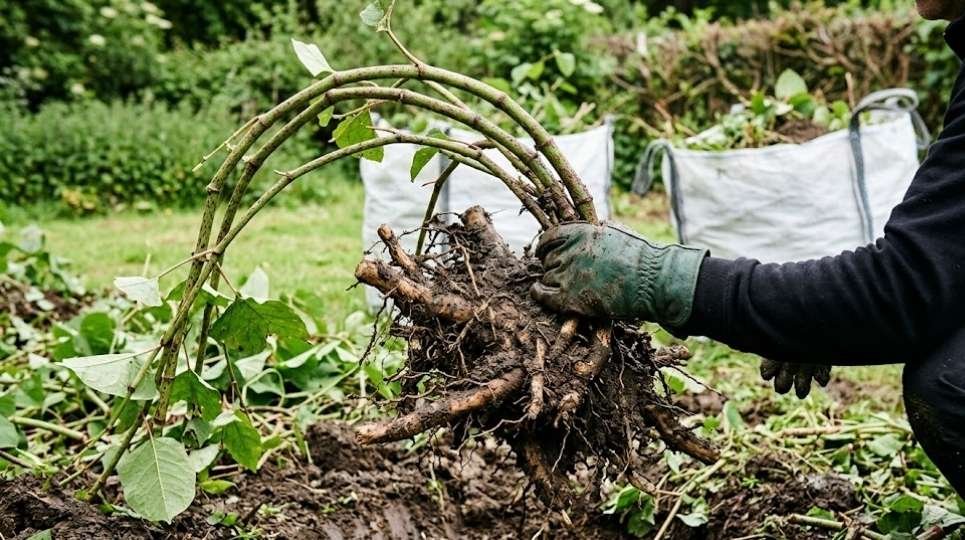
Where speed matters, for example ahead of property sales or a development deadline, excavation is the most direct solution to remove Japanese knotweed quickly. This involves digging out the knotweed and contaminated material and taking it off site for disposal at a licensed facility.
Full excavation can completely remove Japanese knotweed from the land and provides a more lasting outcome compared to herbicide alone. For smaller jobs, sifting and screening the excavated soil on site can reduce disposal costs, as clean ground can be retained and reused.
On-Site Burial and Root Barriers as a Practical Solution on the Right Properties
Where space allows and excavation off site is not practical, on-site burial involves encapsulating the knotweed plant in a specially prepared pit. This can reduce costs on the right property but requires careful management and is not a universal solution.
Root barriers can also be installed to physically block lateral rhizome spread and protect structures from the weed working its way across a plot. Our Japanese knotweed specialists will provide expert advice on which solution fits your situation, covering all treatment methods available to you.