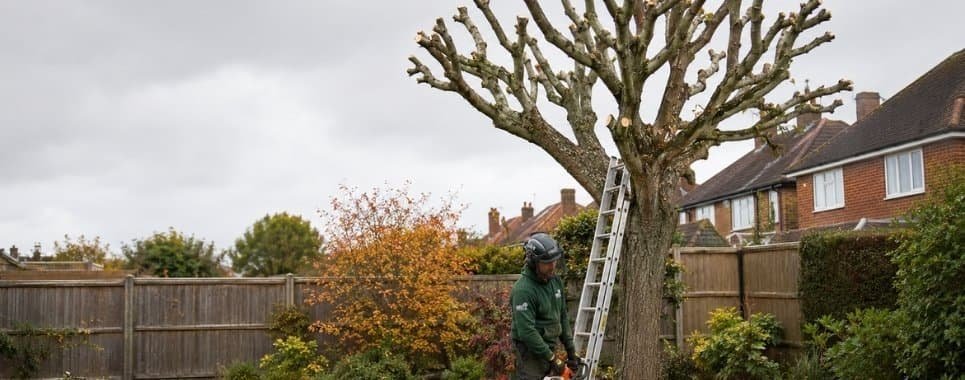
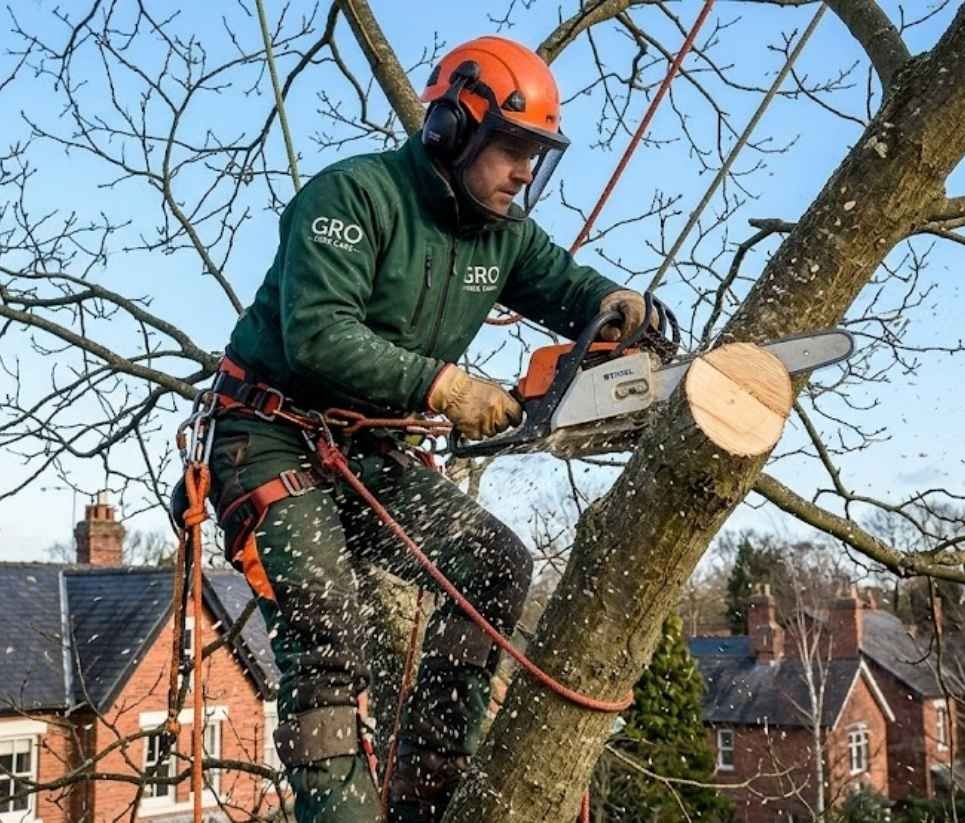
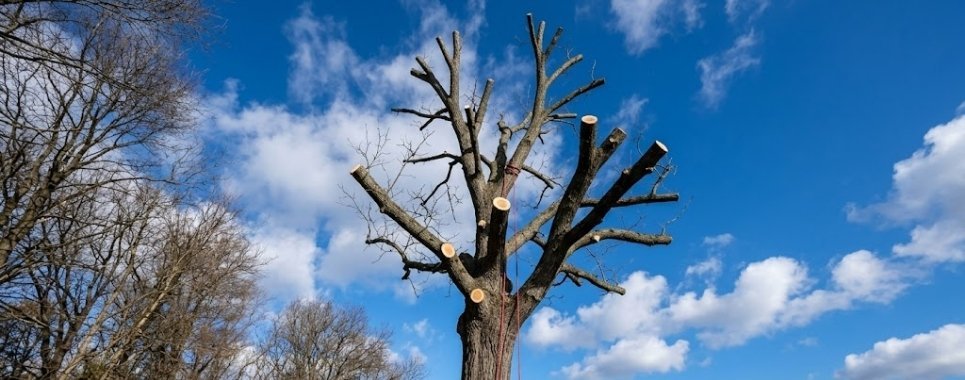
The work involves cutting back the upper branches to a smaller, balanced shape. Every cut is made back to a suitable growing point, keeping dormant buds in place so the tree can produce new growth and new branches naturally.
The approach differs by species. Beech, including fagus sylvatica, and common lime both respond well when the work is carried out at the right time. Spring is generally a good time for many broadleaved trees, though timing varies by species and condition. Conifers need more care because they do not produce new shoots from old wood the way broadleaved trees do.
Crown thinning is sometimes done at the same time, using a method that targets selected branches from within the structure. When trees are thinned in this way, light and airflow increase through the whole tree. A well thinned tree has fewer crossing or competing branches, the upper branches included, and dries out faster after rain, which helps prevent fungal diseases.
How We Reduce Wind Risk
Trimming the outermost foliage lowers the wind sail effect, protecting the tree from limb failure during storms. When trees are thinned, wind passes through the structure more easily rather than hitting it like a wall. This is particularly relevant for street trees and for trees in exposed positions around Hazel Grove.
Reducing the crown also reduces leverage forces on the root system during high winds. When trees are left unpruned for too long, the gap between what the roots can resist and the forces the crown generates begins to widen. That gap can lead to failure, particularly in older or already stressed trees. Getting ahead of this through regular pruning is part of what we do.
What Happens to a Tree After the Work
Pollarding is the most intensive form of this kind of work. A pollard encourages vigorous regrowth, and pollarded trees can start producing new branches by the next growing season. With a standard crown reduction, new growth follows within the same season, and the tree redirects energy into its remaining healthy limbs.
A tree that has been properly thinned is more efficient. Trees that have been thinned well stop pushing resources toward weak or competing limbs, which produces stronger, more directed growth that lasts for years. We carry out this work in a way that creates good conditions for the tree long after we have left the site.