
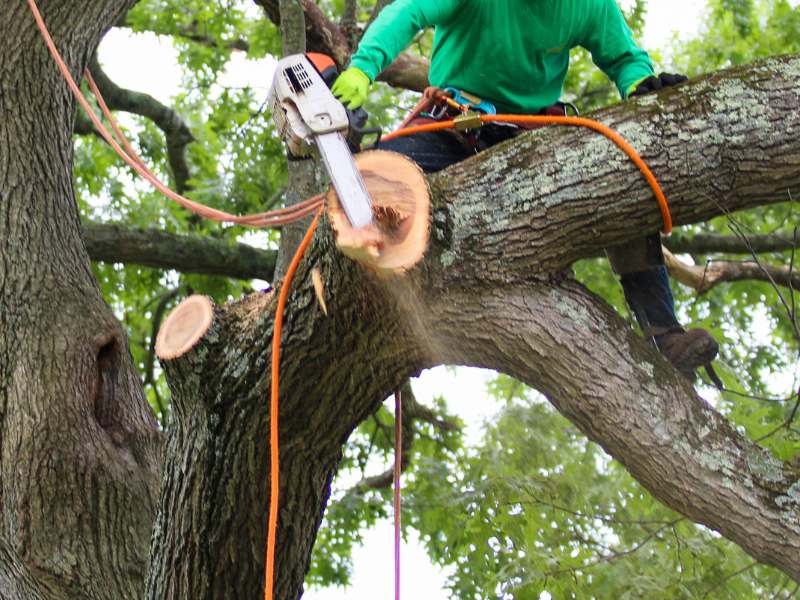
If your neighbour's tree hangs over your fence and drops branches on your patio, you probably want one simple answer. Who pays to cut down overhanging trees? For most gardens in the UK, the answer is that you do. But there is more to it than that, and the details matter if you want to stay on the right side of the law.
Across the UK, there are around 28 million homes, and a huge number of them share a fence, wall, or hedge line with their neighbours. With an estimated 3.2 billion trees across the country, roughly 47 for every person, it is no surprise that overhanging branches crossing onto a neighbour's property are one of the most common neighbourhood disputes homeowners run into. Complaints about overhanging trees are especially common in spring and summer, when growth speeds up. This guide from GRO Treecare walks through who pays, what the law lets you do yourself, and when you need help.
Here is the short version. If a neighbour's tree overhangs your garden, you are generally responsible for paying to cut back overhanging branches if you want them gone. The tree owner is not normally required to pay for pruning simply because branches overhang your neighbour's property. You can trim overhanging branches yourself, or pay a tree surgeon to do it, but the cost usually falls on whoever wants the work done.
There are exceptions. If the tree is causing damage, is dead or dangerous, or blocks a public path, the tree owner may have to pay instead. Protected trees also change the picture, since permission rather than payment becomes the main issue. We cover each of those situations below.
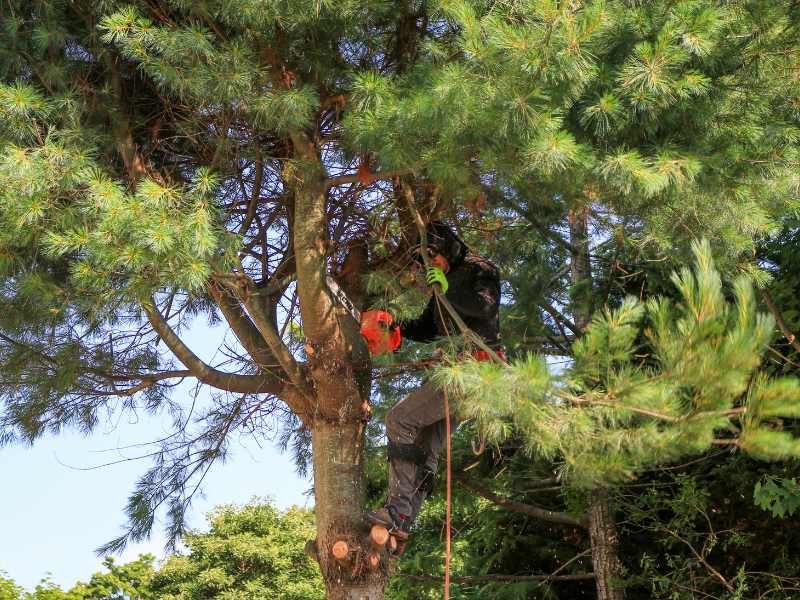
Before you touch a saw, it helps to know who actually owns the tree. Tree ownership is based on where the trunk grows, not where the branches end up. If the trunk stands entirely on your neighbour's land, the tree belongs to them, even if half the branches spread into your garden as overhanging tree branches.
If a tree grows right on the property boundary between two properties, with the trunk sitting across the line, it can be jointly owned by both neighbours. That matters because jointly owned trees usually need agreement from both sides before any major work goes ahead, not just a trim of overhanging branches. Knowing who owns a tree also tells you who is responsible for its general health, and who would be liable as the landowner if it ever caused damage. Certain trees, particularly old or large ones, come with more responsibility attached simply because of their size. If your neighbour's tree overhangs a shed, greenhouse or drive rather than an open lawn, the same property boundary rule still applies regardless of what sits underneath.
English and Welsh law gives homeowners a legal right known as abatement. Under common law, branches overhanging your garden are treated as a kind of trespass into your airspace, and you are allowed to deal with them yourself without asking permission first. This right to abate covers overhanging tree branches, and it covers tree roots that push under a fence and into your own property.
You can cut overhanging branches back to the exact point where your property ends and your neighbour's garden begins. The same goes for tree roots. If they have pushed under your patio or into a flower bed, you can cut branches and roots back to the property boundary too. You do not need to seek permission from your neighbour to do this, though it is usually a good idea to mention it first. A short conversation can save a lot of tree disputes further down the line, and it keeps the relationship with the neighbors on good terms.
There are limits. You cannot cut beyond the boundary line, even by a few inches. You must not enter your neighbour's garden without permission to reach the branches overhanging your side, even if leaning over the fence would make the job easier. Doing either of those things can turn simple branch clearance into trespass or property damage on another person's property, and that can lead to legal action.
Overhanging branches that reach across a shared drive follow the same rule as branches over a garden. If a tree has a Tree Preservation Order or sits within a conservation area, you also need permission before cutting overhanging tree branches, which we explain further down.
This part surprises a lot of people. Branches, leaves, and fruit that you cut from an overhanging tree still legally belong to the tree owner. You cannot simply throw them back over the fence or put them out with your own rubbish, since that can even count as a form of fly-tipping if done carelessly. The correct approach, and the tree owner's legal obligation to accept if they wish, is for you to offer the cuttings back to your neighbour. Most people do not want a pile of branches returned to them, but offering is still the right thing to do. If they decline, you are responsible for disposing of the green waste properly. Leaving cuttings piled on your neighbour's property without asking first is best avoided too.

The general rule is that the affected neighbour pays. UK law does put some responsibility back onto them in certain cases, though, and this is often where the tree owner's responsibility genuinely kicks in.
If a tree's roots crack your patio, lead to blocked drains, or its branches damage your roof or fence, the owner may be liable for the cost of repairs. This usually applies when they knew, or reasonably should have known, about the problem and failed to act. If a tree falls and causes property damage on the tree owner's property or yours, that is a strong example, especially where it was already dead, diseased, or clearly unstable. Tree owners are expected to exercise reasonable care and keep an eye on the condition of large trees close to a boundary, since ignoring an obvious risk can shift the legal position firmly onto them.
Local authorities have powers to step in when branches obstruct a public road, pavement or right of way. If a tree owner ignores a request to cut back branches that are causing a hazard, the local council can arrange the work itself and recover the cost from the property owner. This sits apart from the neighbour disputes covered above, and it applies even if no one next door has complained.
Not every tree can be cut freely, even on your own side of the boundary. Some trees are protected trees, and cutting them without permission is a criminal offence. This is especially worth checking for overhanging trees that look completely ordinary but turn out to carry a Tree Preservation Order.
A Tree Preservation Order, generally known as a Tree Preservation Order TPO, is issued by a local council to protect specific trees or groups of protected trees. It is illegal to prune, top, or fell a tree with a TPO without written consent from the council, even when the branches are overhanging your garden. This applies whether you own the tree or you are the neighbour dealing with the overhang. Before cutting back overhanging tree branches, it is worth checking with your local authority or asking a professional tree surgeon to check the tree's status for you.
If you live within a conservation area, most trees with a trunk over 75mm in diameter, measured at 1.5 metres above ground, are automatically protected, even without a formal TPO. You need to give your local authority six weeks' written notice before carrying out any work. This gives the council a chance to decide whether the tree deserves a full Tree Preservation Order before work goes ahead, and it is one of the clearest legal obligations anyone dealing with protected trees needs to know about.
Unauthorised work on a protected tree is not a small mistake. Fines can reach up to £20,000 in a magistrates' court, and more serious cases can be sent to the Crown Court, where there is no upper limit. This is one of the few situations where cutting overhanging tree branches without checking first can genuinely cost far more than the tree work itself would have.

Prices vary a lot depending on the size of the tree, how easy it is to reach, and where you live.
Trimming a small tree with straightforward access typically costs between £80 and £180. Larger trees, or ones that need ropes, ladders or climbing equipment, usually run from £250 up to £800 or more. Many tree surgeons charge a day rate for bigger jobs, with the average sitting somewhere around £350 to £450 a day for a small team, though prices in London and the South East often run 15 to 20 percent higher. Waste removal and branch clearance are sometimes charged separately and can add another £50 to £150 on top.
Overhanging branches on larger, older trees tend to sit at the upper end of these figures. This price is a rough guide, and the actual cost varies depending on the tree, your location and the surgeon you choose, so it is worth getting two or three quotes and some professional advice before you commit.
Most tree disputes never need to reach a solicitor. Many neighbour disputes involving overhanging trees are resolved through a simple conversation before anyone gets close to legal action. If fallen leaves are filling your gutters or a shadow is creeping across your lawn, start by explaining the problem and asking if your neighbour is happy for you to trim back to the boundary line.
If they refuse, if a neighbour complains about work you have already done, or if communication breaks down, mediation is a sensible next step for boundary disputes. A written report from a tree surgeon can help too, showing that the work you want to carry out is reasonable and will not harm the tree. If a neighbour cuts branches on your side without asking, the same principles apply in reverse, and a calm conversation is still the best first step. If your neighbour's tree overhangs a shared path or drive, mention any access problems too, since these are usually sorted out alongside the branch trimming itself. Keep any letters or messages you send, since a written record helps if the disagreement ever needs to go further.
Some jobs are fine to handle yourself with a pair of loppers, but tall trees, thick branches, or anything near power lines or a building calls for professional help. If you've ever wondered what do tree surgeons do, their work goes far beyond simply cutting branches. Experienced tree surgeons carry insurance, know how to assess a tree's condition, and understand which trees need council permission before any tree pruning work begins.
Pruning and crown reduction are among the most common jobs professional tree surgeons carry out on residential properties across the UK. A good tree surgeon working for a reputable tree services company will tell you honestly if a tree is protected before they touch it. If you are at all unsure about a tree's condition, ownership, or legal status, getting professional advice first can save you from a costly mistake, and it is often the difference between a straightforward trim and a dispute with the neighbours.

There are a couple of smaller rules worth knowing, since they catch a lot of homeowners out and sit alongside the main overhanging trees rules above.
Falling leaves and fruit are treated as a natural nuisance under UK law, not damage. Tree owners are responsible for fallen fruit and leaves only if they end up leading to blocked drains. They are not required to rake up every leaf that lands in your garden. You can compost or dispose of small amounts yourself. If leaves are regularly blocking your drains, mention it to your neighbour and keep a note of the dates, since a pattern of ignored complaints strengthens your legal position if the problem causes damage later. It is worth noting that similar principles apply to high hedges, which have their own separate complaint process through the council if they block light rather than simply overhang a garden.
Even branches you are fully entitled to cut come with a timing rule. Under the Wildlife and Countryside Act 1981, it is an offence to damage an active wild bird nest, and the nesting season generally runs from March to August. Tree growth is also fastest through the UK spring and summer, which is exactly when most pruning requests land on a tree surgeon's desk. Where you can, plan overhanging branch work for autumn or winter, and always check for nests before cutting anything back during the warmer months.
Here is how responsibility usually breaks down once you strip away the details.
Knowing who owns a tree, what a boundary line actually means in law, and how overhanging trees fit into UK law will settle most tree disputes before they start. When in doubt, a quick check with your local authority or an experienced tree surgeon is far cheaper than getting it wrong.